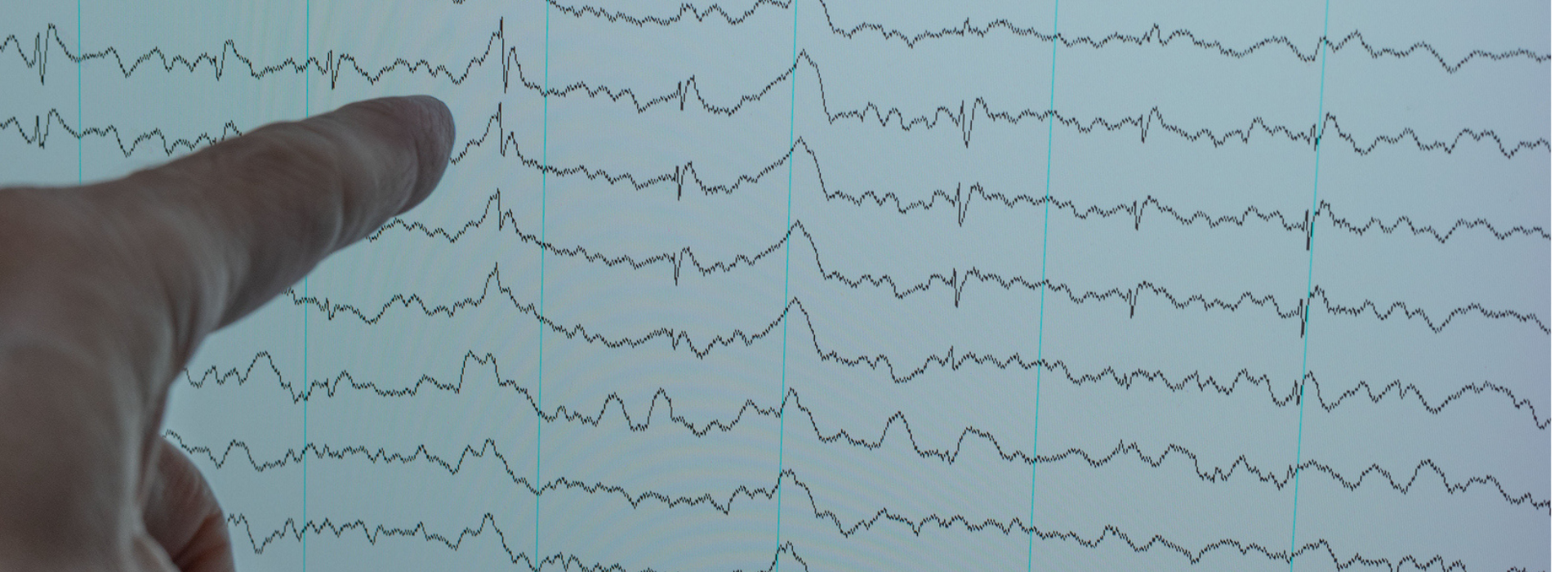

Epilepsy affects around 1 in 100 people in the UK. It is a condition that causes abnormal electrical activity in the brain, which increases the likelihood of recurrent seizures.
While epilepsy can occur at any age, it most commonly first develops either during childhood or in adults aged over 65.
Here, we will explore the causes, symptoms and complications of epilepsy, as well as how it is diagnosed and treated.
Causes of epilepsy
Epilepsy can be caused by any damage or disorder that leads to abnormal electrical activity in the brain.
Your genetics have a role to play and your risk is higher if you have a developmental disorder that leads to developmental delay and/or cognitive issues. For example, autism is linked to a higher risk of epilepsy.
Head trauma that causes a structural defect in the brain and stroke (both ischaemic stroke and haemorrhagic stroke) that causes brain damage and scarring can both lead to epilepsy.
Other conditions that can increase the risk of epilepsy include:
- Autoimmune conditions of the brain — these cause autoimmune epilepsy
- Brain infections such as meningitis and viral encephalitis
- Brain tumours
- Metabolic conditions
Types of epileptic seizures
There are several types of epilepsy, which can be grouped according to which parts of the brain they affect.
The 2 main types of epileptic seizures are:
- Focal or partial seizures — these affect one half (hemisphere) of the brain
- Generalised seizures — these affect both halves of the brain
Generalised seizures can be further divided into:
- Absence seizures — during a seizure, you blank out and lose awareness
- Atonic — during a seizure, your muscles go limp and you may collapse
- Myoclonic seizures — during a seizure, your body goes through brief jerks
- Tonic-clonic seizures — during a seizure, your body may go stiff (tonic) or shake and jerk (clonic)
- Clonic seizures
- Tonic seizures
Epilepsy symptoms
As discussed earlier, epilepsy symptoms vary depending on the type of seizure you are having. Symptoms can, therefore, include:
- Blanking out and staring episodes — as you appear conscious, onlookers may think you are confused or have forgotten something
- Collapsing
- Loss of consciousness
- Shaking or jerking
- Stiffness
Other more subtle symptoms include sensory disturbances, such as a tingling or rising sensation in your stomach or altered taste sensations. Some individuals experience déjà vu or a sudden feeling of fear.
How is epilepsy diagnosed?
To be diagnosed with epilepsy you must have had at least 2 seizures more than 24 hours apart.
A key part of diagnosis is a detailed history of the seizures, witness statements and video evidence. This is because it is very unlikely that a doctor will be present to witness a seizure unless you are in hospital when the seizure occurs.
A history of the seizures will be taken from the individual suspected of having epilepsy and a family member or friend who has witnessed the seizures.
You may also need to have:
Epilepsy treatments
The main treatment for epilepsy is antiseizure medications. Different antiseizure medications are prescribed depending on the type of epilepsy you have. You may need to take 2–3 different types of medication to control your seizures. However, the more medications you take, the greater the risk of side effects.
If your epilepsy is not well-controlled with medication, you have to keep switching medications, or you need to take several different types of medication but still have poorly controlled epilepsy, your doctor may recommend surgery.
Surgical treatment for epilepsy is only possible if a specific area of the brain can be identified as causing the seizures.
If brain surgery is not possible, your doctor may recommend vagus nerve stimulation to reduce the frequency of your seizures. This involves implanting a nerve stimulator device near your collarbone and connecting it to the vagus nerve. The device can then trigger nerve signals to be sent via the vagus nerve to the brain.
Other treatment options include a ketogenic diet, particularly for children for whom medications are not effective. This specialised diet is low in carbohydrates and high in fat. This is a medical treatment and, therefore, must be undertaken with the supervision of a hospital medical team, which includes a dietitian.
Lifestyle changes
You can reduce the likelihood of seizures by taking steps to reduce your stress levels and maintaining good sleep habits so you get enough sleep each night. Reducing how much alcohol you drink can also help.
If your epilepsy is light-sensitive, avoiding flashing lights, strobe lights, flickering lights and certain video games will help.
Outlook for epilepsy
In children, epilepsy may get better on its own as they get older and completely resolve by adulthood.
In adults, epilepsy that is well-controlled with medication can result in an individual becoming seizure-free. In these cases, it may be possible to wean off medications after 2 years without seizures — this must be carried out under the care of a neurologist. However, not everyone can wean off anti-epileptic medication.
With appropriate treatment, some studies show around 6 in 10 people with epilepsy can become seizure-free within several years, depending on the cause. While some people with epilepsy will continue to have uncontrolled seizures, the majority will have well-controlled epilepsy with only occasional breakthrough seizures or become seizure-free.
Complications of epilepsy
Well-controlled epilepsy does not cause many health complications. However, having epilepsy does increase your risk of SUDEP, that is, sudden unexpected death in epilepsy. SUDEP is very rare, affecting 1 in 1,000 people with epilepsy. Your individual risk depends on the type of epilepsy you have and how well-controlled your seizures are.
A common risk associated with epilepsy is injury or accidents during a seizure, such as fractures and dislocations. Especially in the early stages after diagnosis, it is important to try to reduce this risk by avoiding certain activities until you are seizure-free or your epilepsy is well-controlled. This includes:
- Driving — you must inform the DVLA if you have a seizure and stop driving
- Having baths — have showers instead
- Lifting weights unsupervised
- Using heavy machinery unsupervised
You should also be mindful of your circumstances and consider what would happen if you had a seizure in your current environment and whether you would be at risk of injury or worse.
Living with epilepsy and taking long-term epilepsy medication that produces side effects can take a toll on your mental health. Seizures can also affect your cognitive ability, for example, by causing seizure-associated memory problems.
Epilepsy and pregnancy
If you are planning to become pregnant, there may be challenges to overcome regarding your medications.
Some epilepsy medications are not safe to take while pregnant due to the effects they can have on the foetus. You may, therefore, need to switch medications or explore other treatment options with your doctor.
You will need to be carefully monitored during your pregnancy to ensure good seizure control as seizures can affect the development of the foetus, and pregnancy can reduce or increase the frequency of your seizures.
It is important to note that the majority of women with epilepsy who become pregnant do not develop any negative outcomes during pregnancy or childbirth due to their epilepsy.
Living with epilepsy
Living with epilepsy means you will have to make changes to your lifestyle to reduce the likelihood of having seizures. This may involve taking regular medication, following a healthy diet and sleep schedule, reducing how much alcohol you drink and being proactive about managing your stress levels.
Managing all of these aspects of your life can lead to mental health struggles, including anxiety and depression. This is where it is important to seek help via your GP and get support from friends, family and other networks.
With the right treatment and support, you can lead a full life with well-controlled epilepsy.
You can find advice and support for living with epilepsy from Epilepsy Action, Epilepsy Society, Young Epilepsy and the Brain Charity.